My Porsche Web
Designing the product entry around ownership
Project
My Porsche
Timeline
2023 Q3 - 2024 Q1
Key Contributions
UX vision, structure, navigation redesign, and design system scalability.
Team
1 Product Owner 8 Developers 1 Business Analyst 1 Scrum Master 1 Product Designer (Me) & other relevant stakeholders.
My Role
Lead designer for Portal Core, one of 8 teams
My Porsche Web is built by 8 cross-functional teams, each with a dedicated designer. I was the designer for Team Portal main, responsible for the core overview page and related detail pages. This is the first screen owners see when they log in. Every decision here affects how users perceive the entire product.
What I owned
Core Entry Experience Owned the main overview page and key detail pages (vehicle, configurations, order tracking) that define how owners first interact with My Porsche Web.
Information Architecture Restructured page hierarchy and reduced navigation depth. Shifted the product from feature-first to ownership-first. Pattern adopted by 3 other teams.
Cross-team Design Leadership Drove alignment across 8 teams. Established shared patterns that reduced fragmentation across the platform.
What I did
Discovery & Framing Synthesized insights from user interviews and usability testing with 20+ participants. Reframed the brief from "Reorganize navigation" to "Establish ownership context first."
Design & Prototyping Created user flows, wireframes, and high-fidelity prototypes in Figma. Built interactive prototypes for testing and stakeholder reviews.
Collaboration Facilitated design reviews with PO and engineering. Presented rationale to stakeholders across Porsche digital teams. Synced weekly with other team designers.
System Contribution Contributed new navigation patterns to Porsche's design system. Patterns adopted across Web and Mobile.
Before & After
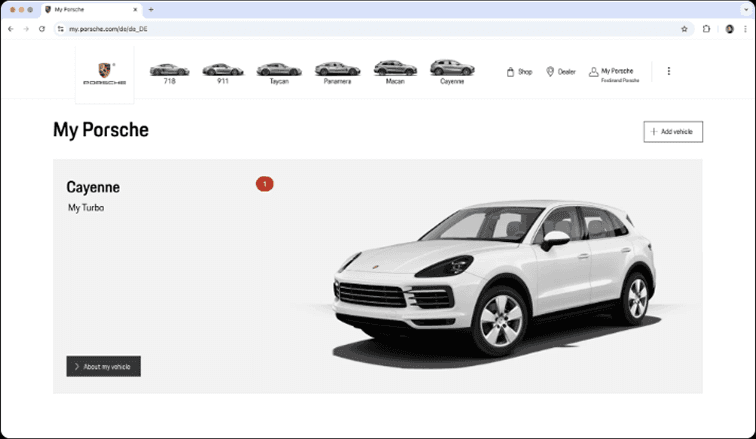
Before
Cluttered header with all vehicle models visible at once.
Actions buried in deep menus. No sense of ownership context.
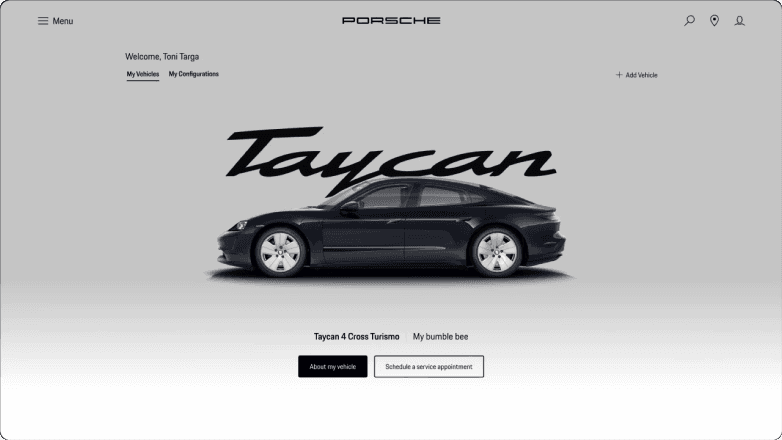
After
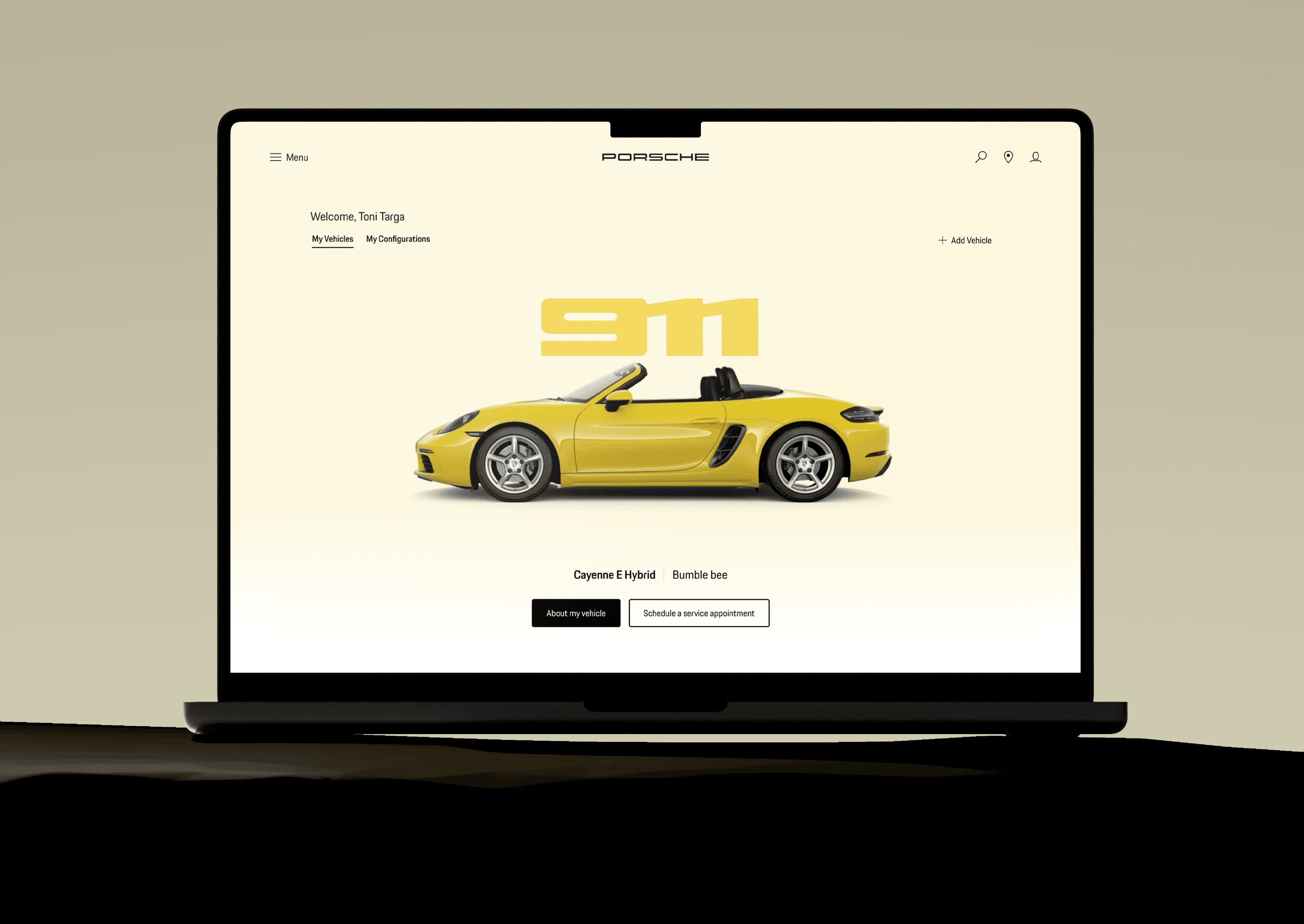
Vehicle-first entry. Clean navigation.
Primary actions surfaced based on what the owner actually needs.
Context
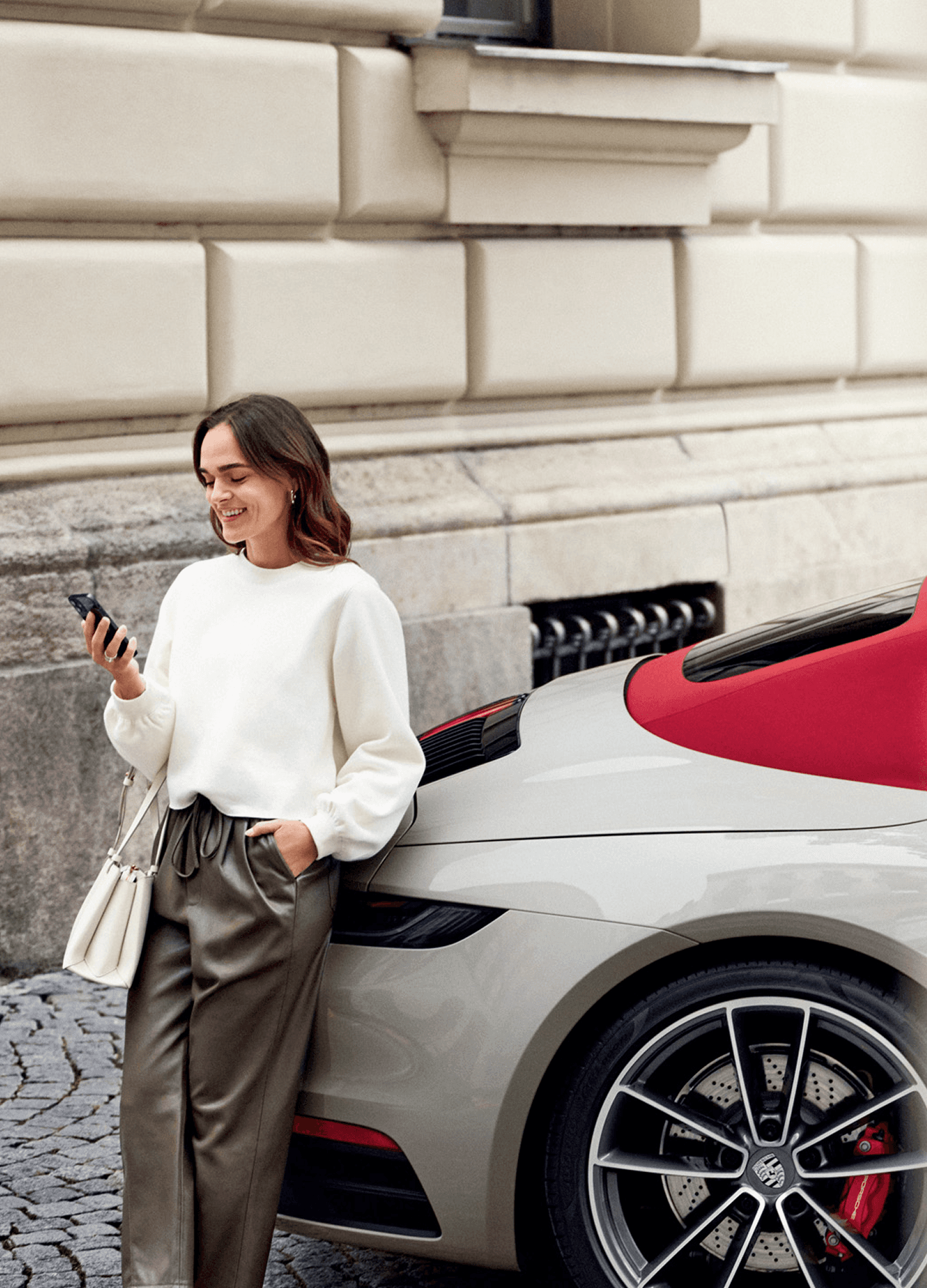
The entry moment defines how the product feels.
My Porsche had grown into a complex ecosystem. More features, more layers, more friction. It worked technically, but it didn't feel like Porsche. Users said it felt like every other car brand. Functional, but not intentional.
For a luxury brand built on precision, that gap mattered.In a luxury product, early hesitation breaks confidence. If users don't immediately understand what belongs to them, trust erodes before they even take action.
The Real Problem
Users weren't confused about features.
They were asked to choose actions before understanding what belonged to them.
The old navigation surfaced everything at once. Vehicle models, services, configurations, promotions. There was no hierarchy based on ownership. Users had to orient themselves manually before they could act.
The interface provided information, but not clarity. It answered "what can you do?" before answering "what is yours?"
Old Navigation structure
Constraints
Designing within a living ecosystem
My Porsche Web doesn't exist in isolation. It's part of Porsche's connected ecosystem, sharing components with the mobile app, Porsche.com, and dealer systems.
Constraint #1
Technical
The navigation had to work within existing frontend architecture. No rebuild from scratch. Changes needed to be incremental and backwards-compatible.
Constraint #2
Business
Multiple stakeholders had competing priorities. Service booking, vehicle tracking, and marketing promotions all wanted visibility on the entry screen.
Constraint #3
Brand
Every decision had to align with Porsche's "Modern Luxury" vision. Simplicity was required, but not at the cost of brand expression.
Core Insight
Luxury is decision clarity. Not more options.
Before deciding what to do, users need to understand what is theirs.
This insight shifted the design direction. Instead of organizing features, we focused on establishing ownership context first. The vehicle becomes the anchor. Actions follow naturally from there.
“There’s a lot on the screen, even though I only need one thing.”
User testing
“It works, but it doesn’t feel like a Porsche experience.”
User interview
“I know what I want to do, but I’m not sure where to start.”
User interview
Reframing the Challenge
From:
“How do we organize all features?”
To:
"How do we guide owners toward what they need right now?"
Solution
A focused product entry with simplified navigation
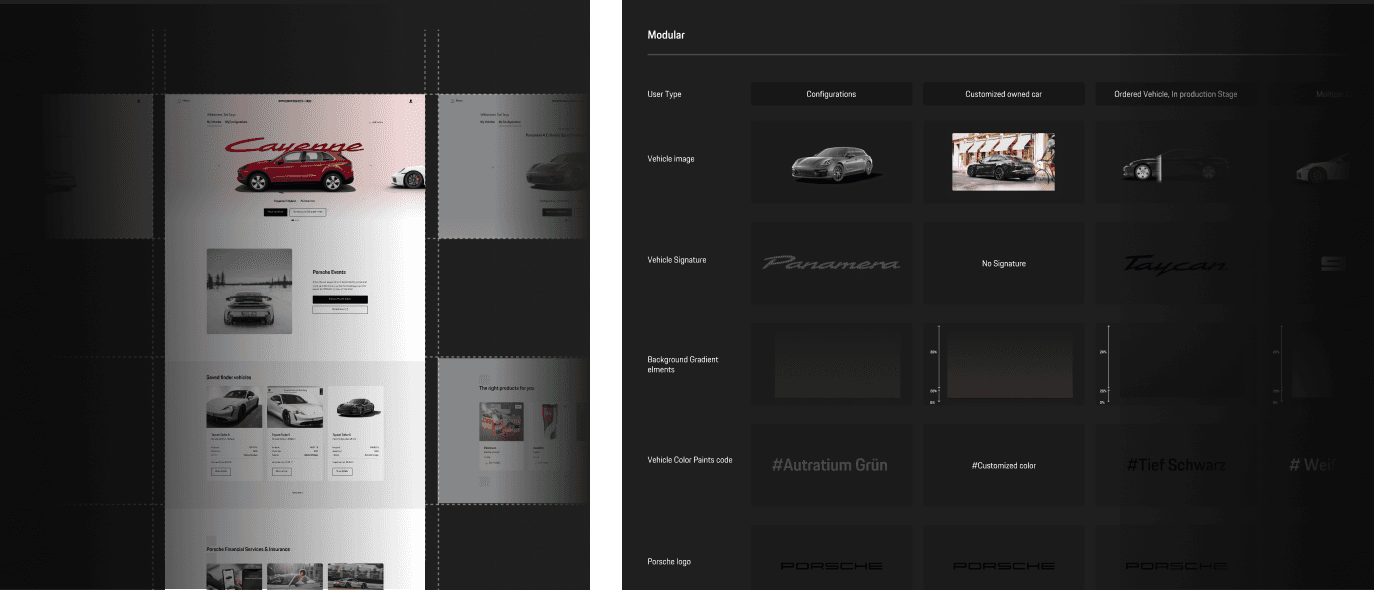
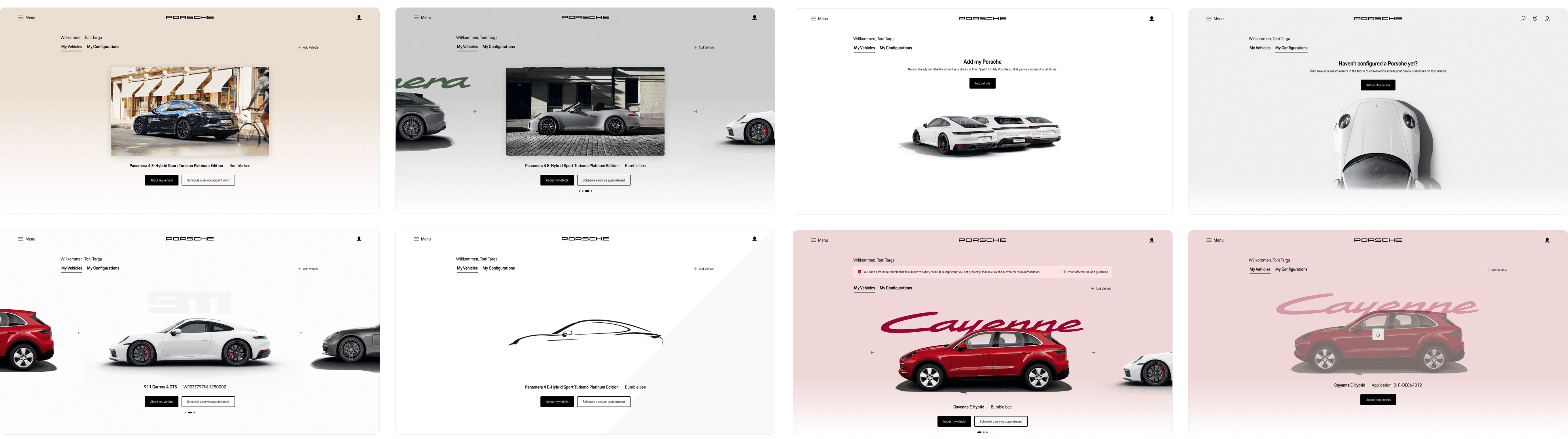
The most relevant vehicle appears first.
For owners with multiple vehicles, the most recently used car appears first. Other vehicles are accessible through a horizontal swipe. No navigation reset, no lost state. Switching between cars feels lightweight and fluid.
Multi-car owner
Why horizontal swipe, not a dropdown?
Impact & Outcome
Quantitative metrics:
The redesign shipped in Q1 2024 and became a reference for other Porsche digital products.
~30% faster
Task completion for Service Appointment booking
3 platforms
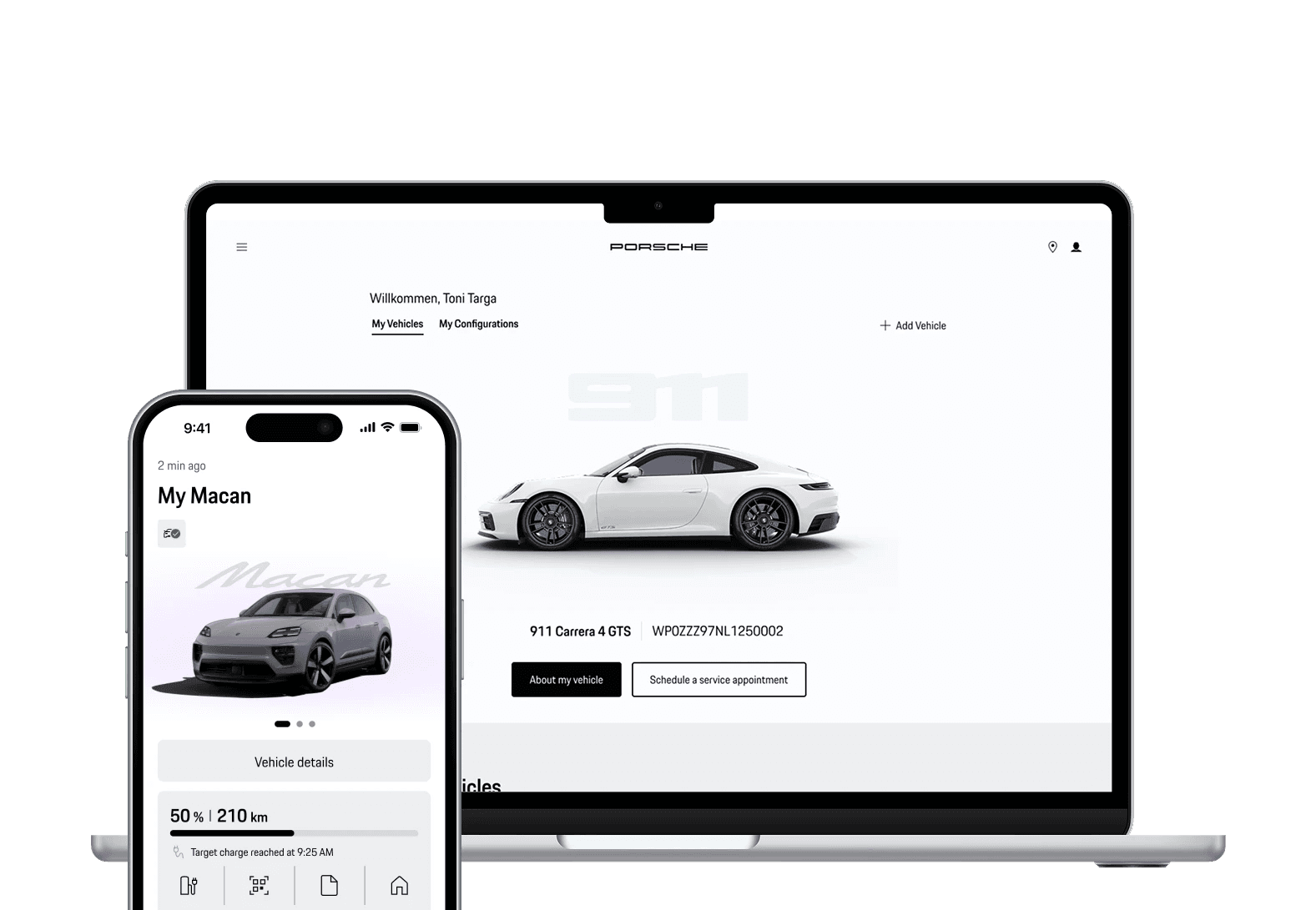
Pattern adopted across Web, Mobile, and Porsche.com
4 → 2 levels
Reduced navigation depth for primary tasks
Qualitative outcomes:
Clearer sense of ownership
Users immediately saw what belonged to them, reducing hesitation at the first moment.
Faster orientation before action
Establishing context first made decisions feel easier and calmer.
Increased confidence and satisfaction
Centering the experience around the owned vehicle increased trust and satisfaction.
Personalization as a shared product standard
The ownership-first approach became a reference for other app teams across Porsche's digital ecosystem.