Enter Password
Track Your Porsche. Track Your Dream.
From Web Foundation to Mobile Evolution
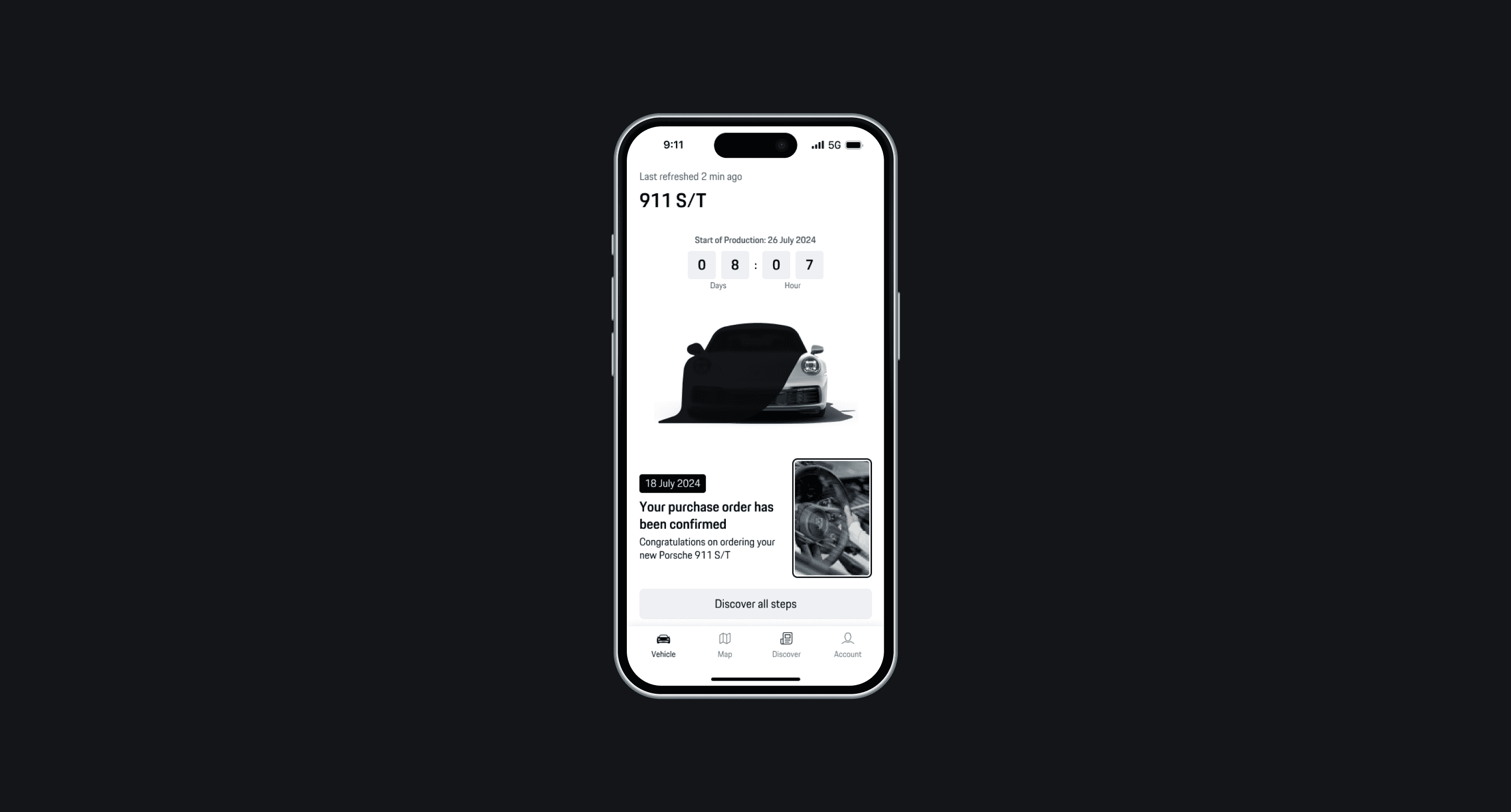
Different Stages, Different Needs . One Static Experience
Track Your Dream showed the same map interface across all phases. During production, users wanted storytelling, visuals, and a sense of progress.
During delivery, they needed precision and timing.The design didn’t adapt to these changing needs, making long waiting periods feel static and disconnected.
Goal
Design a stage-aware experience that evolves with the user’s journey providing emotional storytelling and anticipation during production, and precision and clarity as delivery approaches.
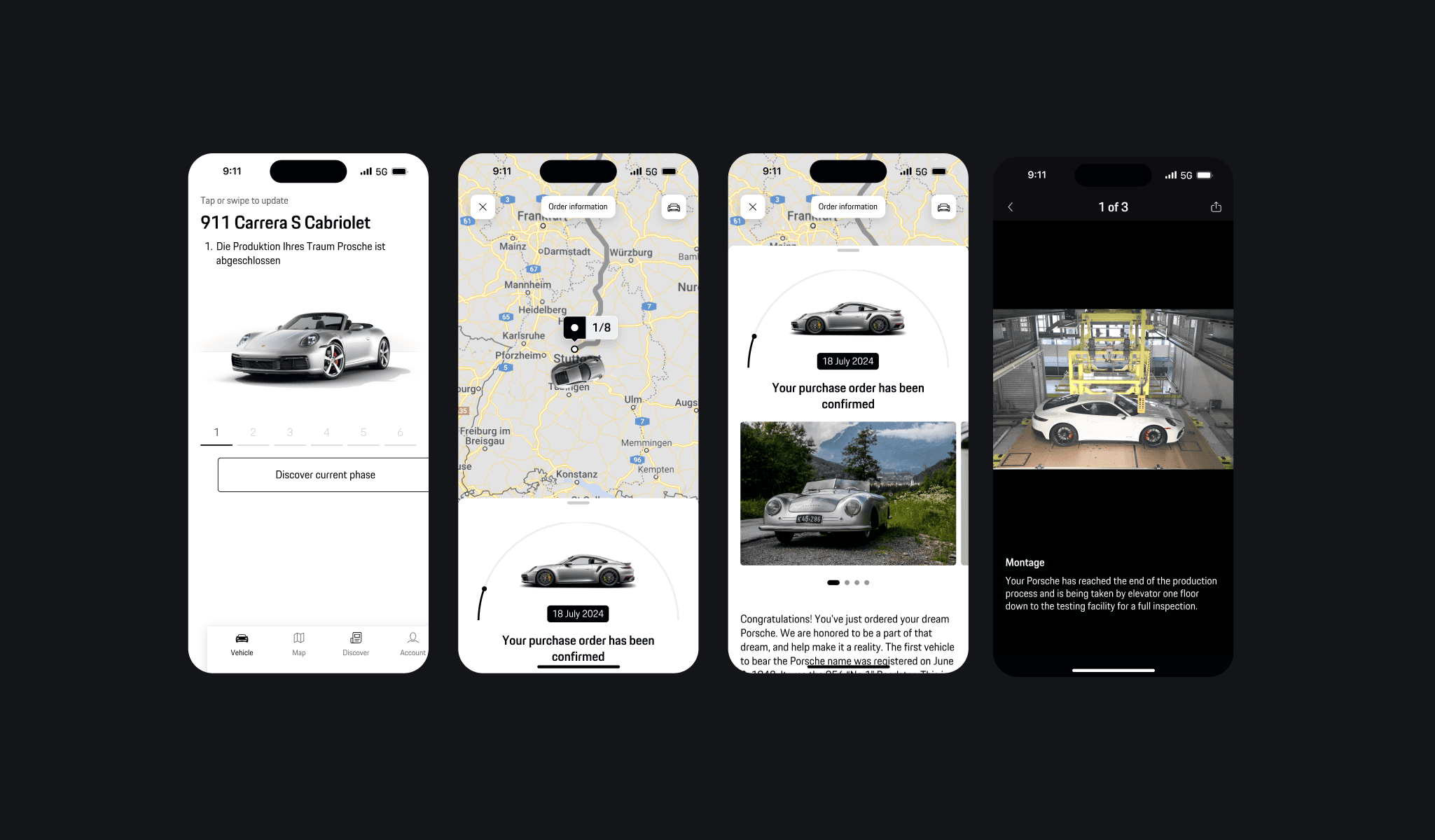
To redesign it, the experience needed to move with the owner.
Not stay frozen in one layout.
Designing for Every Stage of the Journey
Adapt to each stage
Production, transport, and delivery carry different expectations.
The interface shifts its structure and emphasis to match what owners care about most in that moment.
Lead with emotion when movement is minimal
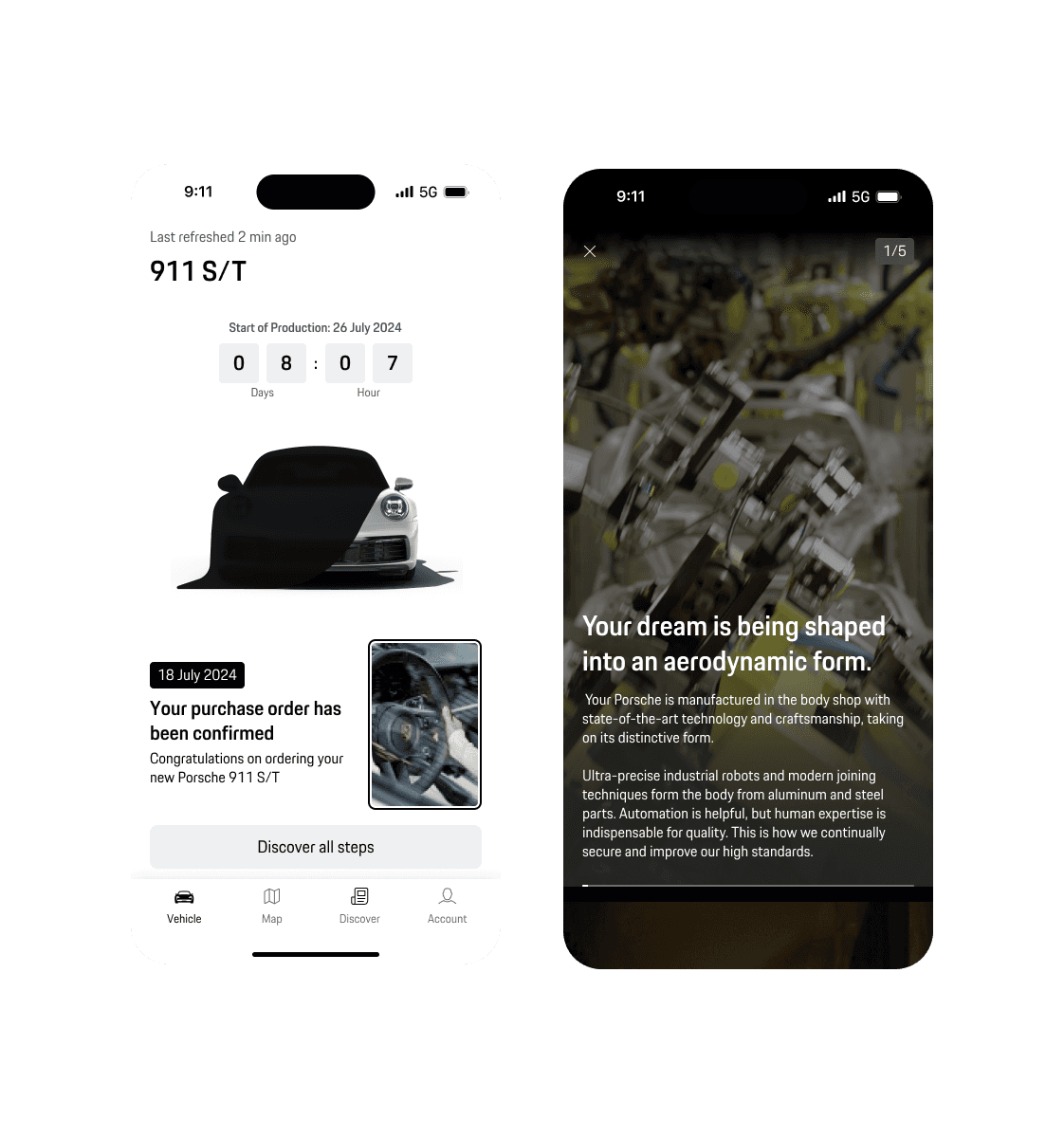
Early production is full of anticipation but low on action. Visual storytelling, milestones, and expressive media bring the experience to life before the car begins to move.
Shift to precision once the car is on the road
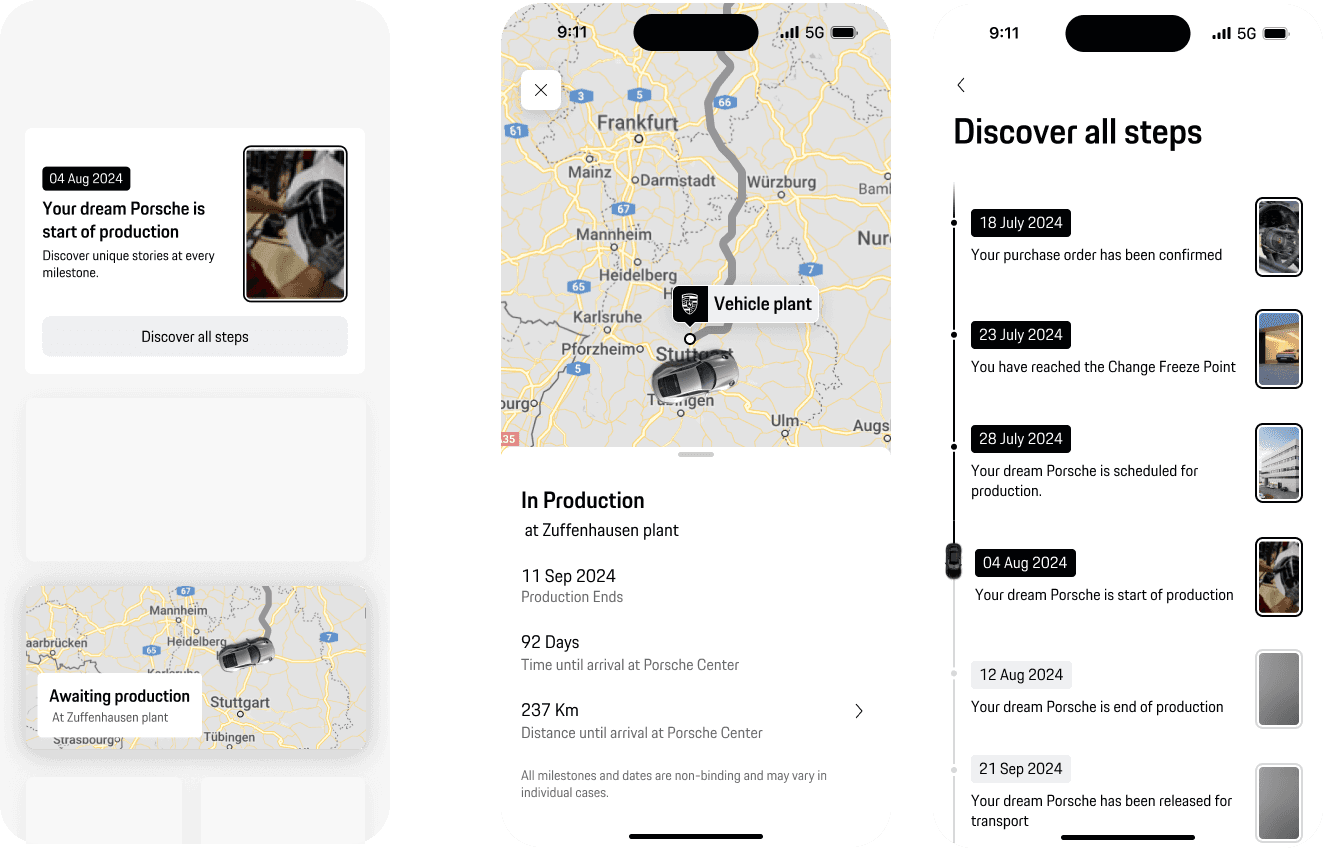
When transport begins, clarity matters more than emotion. The map becomes primary, delivering real-time movement, ETA, and location accuracy.
How the experience adapts across each stage of anticipation.
Order Confirmed
Starting point
Vehicle configuration locked
Order summary
Expected production window
Production
Story-first
Production images
Visual milestone cards
Short-form videos
Progress feed
Transport
Map becomes active
Real-time movement
Location & ETA
Transport-only mode
Delivery
Precision & clarity
Delivery countdown
Dealer handover info
Final reveal of the car
What changed. And why it mattered
Replaced the static map homepage with a dynamic milestone feed because early-stage anticipation needs storytelling, not location data.
Introduced stage-based content modules (photos, short-form videos, progress updates) to match what users expect at each phase of the journey.
Made the map contextual. Only activated once transport begins ensuring precision when movement matters and calm focus when it doesn’t.
Added adaptive visuals and micro-interactions to sustain excitement during long production periods.
Unified production, transport, and delivery into one coherent flow eliminating the fragmented experience of the previous design.
Turning Anticipation Into a Designed Journey
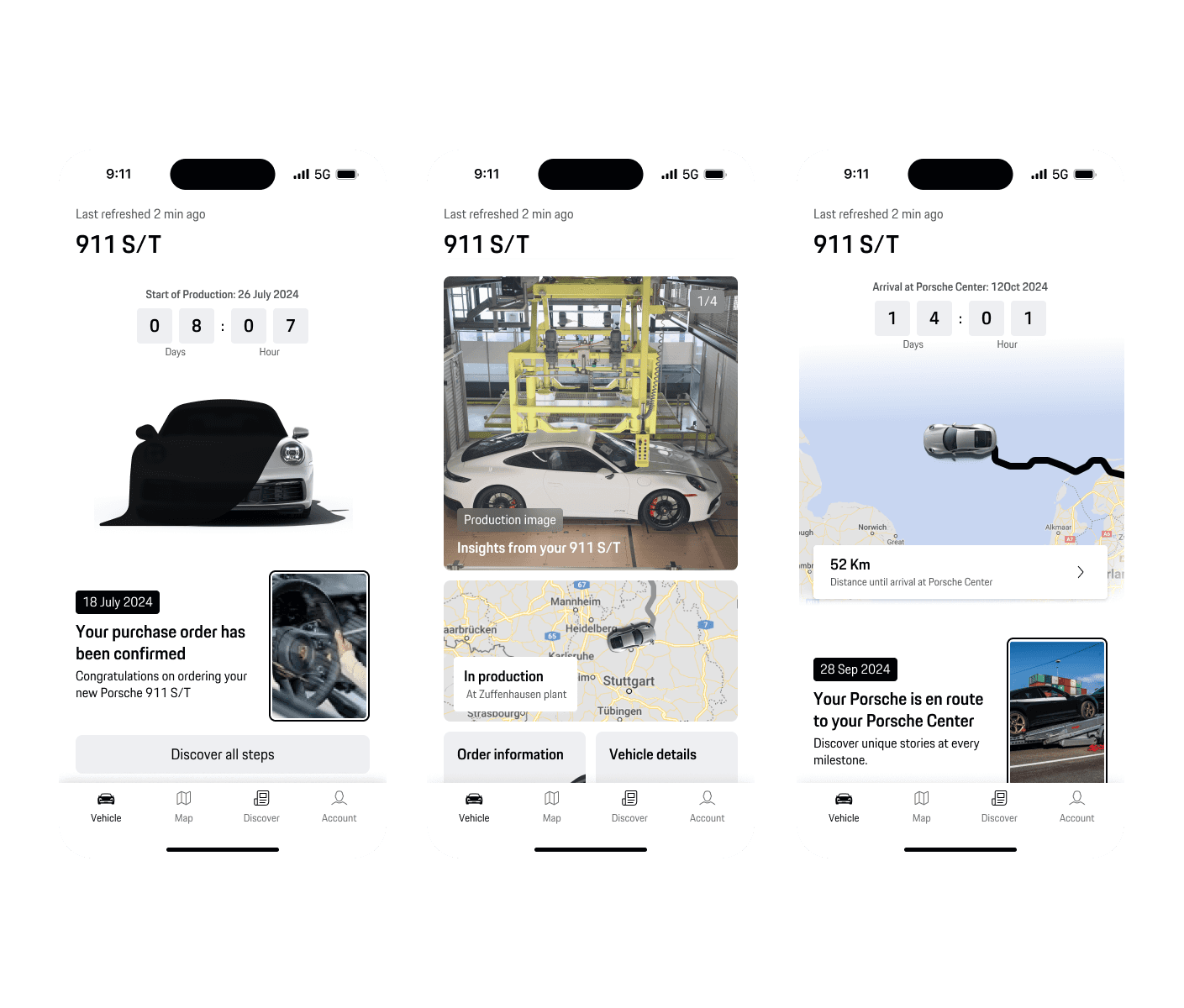
Showing What Matters, When It Matters
The journey begins before the car moves. Early stages focus on reassurance and signs of progress, not a map. The interface leads with story and visual cues, then brings the map forward only when movement becomes meaningful.
Card Layout That Changes With Each Stage
The milestone feed becomes a narrative structure. Each card expands with visuals or details depending on the phase. During production it feels expressive and visual. During transport it becomes more precise and informative.
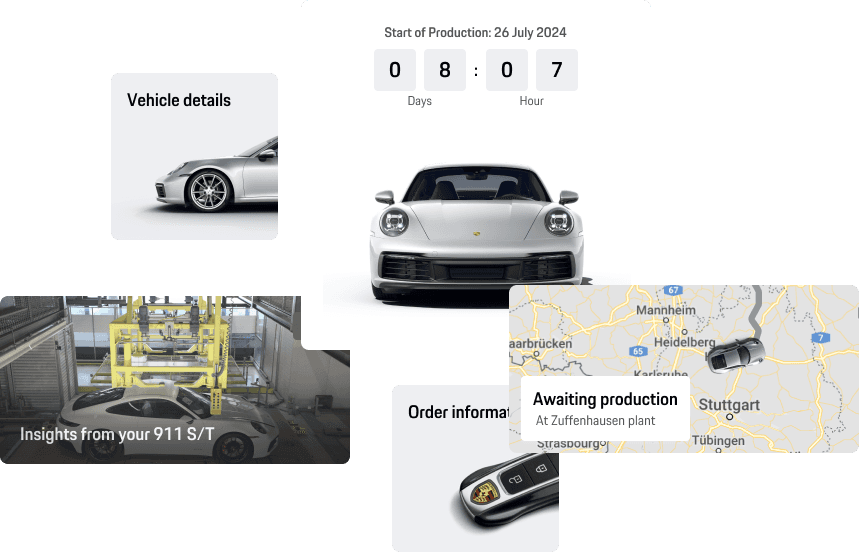
Replacing Text With Emotion
Production is a long, quiet wait. Short-form videos and factory imagery make progress feel real and turn updates into moments that feel worth returning to.
Dividing Map and Content for Clarity
Previously every update was tied to the map, even when nothing had moved. The new design separates what each layer is responsible for. The feed carries story and progression. The map focuses on movement and timing. Each appears only when it adds clarity.
Why the redesigned experience worked
Two research rounds were conducted with more than 50 participants and 6 Porsche owners in the US.
Results showed consistent improvements in clarity, emotional engagement and ease of understanding.
What the redesign accomplished
The new experience made the journey clearer and more engaging.
Owners understood progress at a glance and described the flow as more personal and worth returning to.
• The milestone feed created a simple, intuitive rhythm of progress.
• Visual updates made the long production period feel alive rather than static.
• The map appeared only when movement mattered, improving confidence and reducing unnecessary checks.
• The stage-aware structure provides a scalable foundation for future models and platforms.
Note: The redesigned concept was validated and approved by Porsche stakeholders but was not implemented due to internal budget restructuring.
See also